
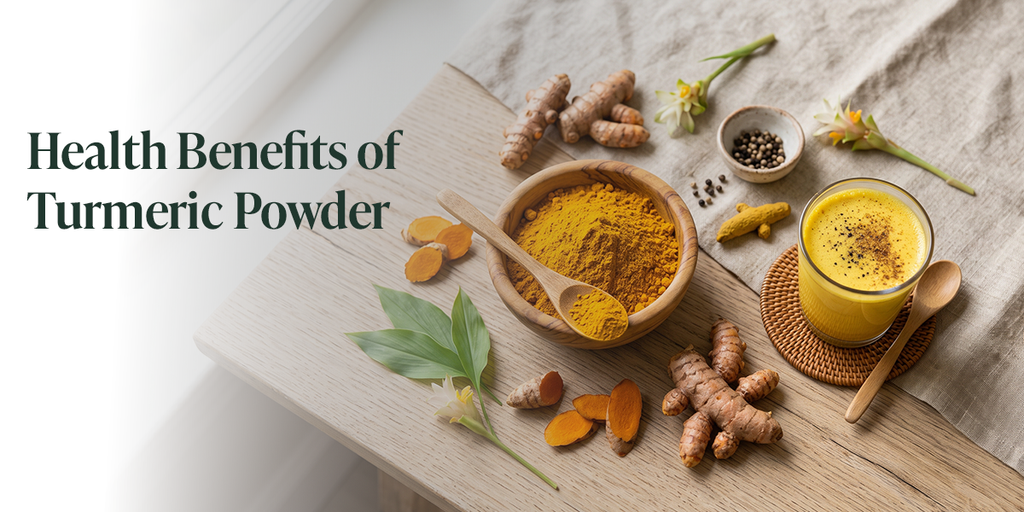
Health Benefits of Turmeric Powder
Curcumin is the active ingredient in turmeric, known for driving much of the research behind the health benefits of turmeric powder for joints, digestion, mood, brain function and heart health, and its role as a strong antioxidant that fights everyday cell damage and skin health, and it works well when added to warm drinks like turmeric tea or golden milk with black pepper and honey for better absorption into the body. Turmeric powder is generally considered safe in normal cooking amounts, though a few conditions and medications may call for a quick check with a doctor first.
Turmeric is a traditional spice that has flavored kitchens for centuries. Most people use it in powder form, sprinkling it into curries, rice, and warm drinks. Its bright orange-yellow color, earthy taste, and mild peppery flavor make it easy to recognize in any dish. Many know it for supporting joint comfort and calming everyday inflammation. Turmeric powder can be bought from stores or ground fresh at home, but either way, it is a convenient ingredient for everyday cooking. Arbornur's organic turmeric powder is one such store-bought option. This article looks at where turmeric comes from, its active compounds, the health benefits of turmeric powder that researchers have studied, and simple ways to add it to your daily diet.
What Is Turmeric?
Turmeric comes from Curcuma longa, a flowering plant in the ginger family. Turmeric is native to South Asia and has been used across the region for thousands of years. Its natural underground stems, called rhizomes, contain the bright yellow-orange compounds that give turmeric its color and earthy flavor.
After harvesting, the rhizomes are cleaned and often boiled before being dried. They are then dried, traditionally in the sun, until most of their moisture is gone. The dried rhizomes are ground into a fine turmeric powder. This makes turmeric easy to store, measure, and add to everyday foods.
Turmeric powder is widely used in curries, rice dishes, pickles, sauces, and drinks. Traditional Ayurvedic practices used turmeric in preparations. Curcumin is one of the main compounds found in turmeric and is responsible for much of its bright color. It is also closely linked to the health benefits of turmeric powder, including its antioxidant and anti-inflammatory properties. But it should not be treated as a cure for disease.
What Is the Active Ingredient in Turmeric?
Curcumin is the main active ingredient found in turmeric. It belongs to a group of natural plant compounds called curcuminoids. Curcumin gives turmeric its bright yellow-orange color and is one reason turmeric is known for its antioxidant and anti-inflammatory properties.
Curcumin acts as an antioxidant, helping the body deal with free radicals and oxidative stress. It can also help calm some of the processes linked to inflammation. These properties may explain why turmeric powder health benefits are often associated with joint comfort, digestion, and other areas of health. Curcumin is only one part of turmeric, though.
Turmeric powder also contains other natural compounds, including turmerones, essential oils, polysaccharides, and minerals. Together, these compounds give turmeric its distinctive color, flavor, and natural properties.
Top Health Benefits of Turmeric Powder
May Reduce Inflammation and Support Antioxidant Activity
Turmeric powder contains curcumin, which has antioxidant and anti-inflammatory properties that help protect cells from oxidative stress and inflammation. Your body naturally produces oxidants as it carries out everyday processes like breaking down substances in the liver. Cigarette smoke, processed foods, and certain drugs also add to oxidant levels.
The main oxidants produced in our bodies are free radicals. Free radicals are unstable molecules; they have a missing electron. Our body cells are also made up of molecules. Free radicals steal an electron from the molecules in our body, which causes cell molecules to suffer damage. When this happens again and again, “oxidative stress” occurs in the body. Oxidative stress causes aging, inflammation, and various diseases in the body. Antioxidants work against oxidants. They give their electrons to free radicals and stop the damage-causing chain reaction.
Vitamin C, vitamin E, and curcumin from turmeric all work as antioxidants. Oxidative activity is also necessary, such as for fighting infections, but sometimes the balance gets disturbed, due to which the body experiences oxidative stress. To balance this stress, antioxidants like curcumin in turmeric play a significant role. So, one of the health benefits of turmeric powder is that it helps to reduce inflammation and oxidative stress.
Turmeric Powder for Digestion and Gut Health
Turmeric powder contains curcumin, which supports digestion, eases abdominal discomfort, and helps maintain a healthy balance of gut bacteria. A 2024 review of 26 studies suggests that turmeric can help with some digestive problems. The findings showed that turmeric and curcumin can improve symptoms linked to digestive issues, such as pain in the abdomen or digestive discomfort.
As the composition of gut bacteria and their role in digestive health became apparent, researchers also started studying the interaction between natural compounds like curcumin in turmeric and the gut microbiome. The gut microbiome is made up of trillions of microorganisms. When the balance of this microbial community gets disturbed, the body suffers from chronic diseases, such as metabolic disorders. Curcumin present in turmeric regulates the microbial diversity and abundance in our gut. In this way, it maintains gut health and homeostasis.
Researchers also tested curcumin on human intestinal cells in the lab. The results showed that curcumin helps reduce the inflammatory response of intestinal cells. One of the health benefits of turmeric powder, which contains curcumin, is its therapeutic role in disease management and prevention.
Turmeric Powder for Joint Health
Turmeric powder may help with joint health by reducing inflammation and easing pain and stiffness, but more research is needed to know how well it works. Arthritis causes inflammation and swelling inside human joints. People manage this discomfort by using non-steroidal anti-inflammatory drugs.
The research on curcumin for joint health shows that curcumin offers benefits in pain relief compared to placebo. It is a safe and effective addition to traditional medicines used to relieve joint pain. But there is not enough evidence to use turmeric or curcumin as a replacement for mainstay therapies. Still, using turmeric for joint health provides a gentle, natural alternative for easing everyday movement.
The health benefits of turmeric powder stem from its ability to target joint stiffness because of its anti-inflammatory properties. Animal and clinical studies confirm that curcumin can calm inflamed tissues. When swelling reduces, this alleviates throbbing ache in weight-bearing knees and hips. While scientists still demand larger human trials, current evidence is promising.
May Support Memory and Brain Function
Turmeric powder can offer benefits for brain health because it contains curcumin, which has anti-inflammatory properties. Research has explored curcumin’s possible effects on memory and cognitive function. In one study, adults without dementia who took a concentrated curcumin supplement twice daily for 18 months showed improvements in memory and attention. The study used a specially formulated curcumin supplement rather than regular turmeric powder. More research is needed to know whether the smaller amounts of curcumin found in turmeric powder can provide similar benefits.
May Support Heart Health
As part of a balanced diet, turmeric powder can be included to support heart health. Its main active compound, curcumin, has been studied for its effects on blood fats and heart risk. A review combined seven clinical trials involving 649 people with cardiovascular risk factors. It found that turmeric and curcumin supplements lowered LDL cholesterol and triglycerides, but effects on HDL cholesterol were less clear.
Researchers also noted that the right dose and form still need further study. Later research has found similar results, although findings vary between studies. These results are promising, but they do not mean turmeric can replace cholesterol medicine or heart treatment. Taken together, one health benefit of turmeric powder is supporting healthy cholesterol levels alongside a healthy lifestyle.
May Help Improve Mood
Turmeric powder can have a role in supporting a positive mood. Curcumin, one of turmeric’s main compounds, has been studied for its possible effects on depression and anxiety. A meta-analysis combined data from 10 studies and 531 participants and suggested that curcumin, if added to standard care, may be effective in treating symptoms of depression and anxiety.
A 2026 review that combined results from 19 separate trials found curcumin helped ease depressive symptoms. Researchers are exploring whether curcumin’s antioxidant and anti-inflammatory effects may partly explain these findings. Most research uses concentrated curcumin supplements. Turmeric powder should not be viewed as a treatment for depression. Still, adding turmeric powder to meals may contribute to an overall healthy eating pattern that supports well-being.
How to Use Turmeric Powder in Cooking for Health Benefits?
Add turmeric powder to curries, soups, rice, eggs, smoothies, or golden milk, pairing it with black pepper and healthy fats to improve curcumin absorption. Turmeric powder is easy to add to daily meals. A little planning helps you enjoy the health benefits of turmeric powder without much effort.
Start in the kitchen. Turmeric powder blends well with curries, soups, and roasted vegetables. It also works in rice, lentils, and stir-fries. If you need a warm drink, try making golden milk or turmeric tea with black pepper and honey. Your body cannot absorb curcumin present in turmeric powder on its own; it needs help with absorption. Adding a little fat and black pepper helps your body absorb curcumin more effectively.
-
Add black pepper to boost absorption.
-
Cook turmeric with olive oil, avocado, or nut butter
-
Mix into smoothies with mango or pineapple, etc.
-
Sprinkle on eggs, omelets, or baked goods.
Stick to small daily amounts. One to two teaspoons of turmeric powder are enough and safe. Large consumption can cause health issues rather than benefits. Turmeric powder health benefits go beyond taste. It adds color, flavor, and a gentle wellness boost to everyday cooking.
Nutritional Profile of Turmeric Powder
One tablespoon (about 8g) of ground turmeric has roughly 24 calories. It also has small amounts of protein, fat, and carbs, plus a good dose of fiber. Turmeric nutrition also brings some minerals to the table. It has a noticeable amount of iron and a modest amount of potassium too.
Per tablespoon, turmeric powder roughly provides:
-
24 calories
-
Half a gram of protein
-
4g carbs, with 1.4g being fiber
-
Under 1g fat
-
Close to 172mg potassium
-
Nearly 3mg iron
These numbers are small on their own. But turmeric adds up when used daily across meals, teas, and drinks.
Is Turmeric Powder Safe for Everyone?
Turmeric powder is safe for most people in normal cooking amounts. But the health benefits of turmeric powder don't apply equally to everyone. If you take high doses of turmeric powder, your stomach can get upset, or it might cause diarrhea. You should also be careful if you have gallbladder problems; turmeric can worsen symptoms. Pregnant women should only take turmeric in the normal amounts used in food or cooking, such as adding turmeric powder to a curry or meal. They should avoid turmeric supplements or consult a doctor before taking them. People with kidney stones may want to limit turmeric too, due to its oxalate content. If you have a medical condition or are unsure whether turmeric is suitable for you, talk to your doctor before using larger amounts regularly.
Conclusion
Turmeric powder contains curcumin, a natural compound that has been studied for its possible health benefits. It is easy to add to everyday meals and drinks, especially when paired with foods like black pepper or warm milk, which may help the body absorb it better. For most people, using turmeric powder in normal amounts is safe. People with gallbladder problems, kidney stones, or those taking certain medicines should talk to a doctor first. Adding turmeric mindfully, rather than in excess, is the key to enjoying the health benefits of turmeric powder. This makes turmeric powder a simple, natural addition to daily wellness routines. If you want a reliable, ready-made option, Arbornur's organic turmeric powder is available for use in cooking and drinks. It is made to preserve the natural color and flavor that turmeric is known for.
Disclaimer
This article is for general information only and is not medical or dietary advice. Turmeric powder and curcumin are not treatments for any health condition, and results can vary from person to person. Talk to your doctor or a qualified dietitian before making major changes to your diet, especially if you are pregnant, breastfeeding, taking medication, or managing a health condition.
Frequently Asked Questions
What are the main benefits of turmeric powder?
Turmeric powder offers antioxidant and anti-inflammatory support, aids digestion, and may ease joint discomfort. It also shows promise for heart health, mood, and memory support when used as part of a balanced diet.
What is turmeric powder good for?
It is commonly used to support digestion, calm inflammation, and add flavor and color to meals. Many people also add it to teas or golden milk for daily wellness.
Why is turmeric considered healthy, and can it cause side effects?
Turmeric contains curcumin, which has antioxidant and anti-inflammatory properties. It is generally safe in food amounts, but large amounts may cause stomach upset or diarrhea.
Does black pepper help with turmeric absorption?
Black pepper contains piperine, which can help the body absorb curcumin better. Adding a small amount of black pepper to turmeric-containing foods or drinks can therefore improve curcumin absorption.
Can you take turmeric powder every day?
Most people can use small amounts of turmeric powder daily as part of their diet. You can add it to meals, turmeric tea, or golden milk. Larger amounts may cause stomach upset in some people.
