
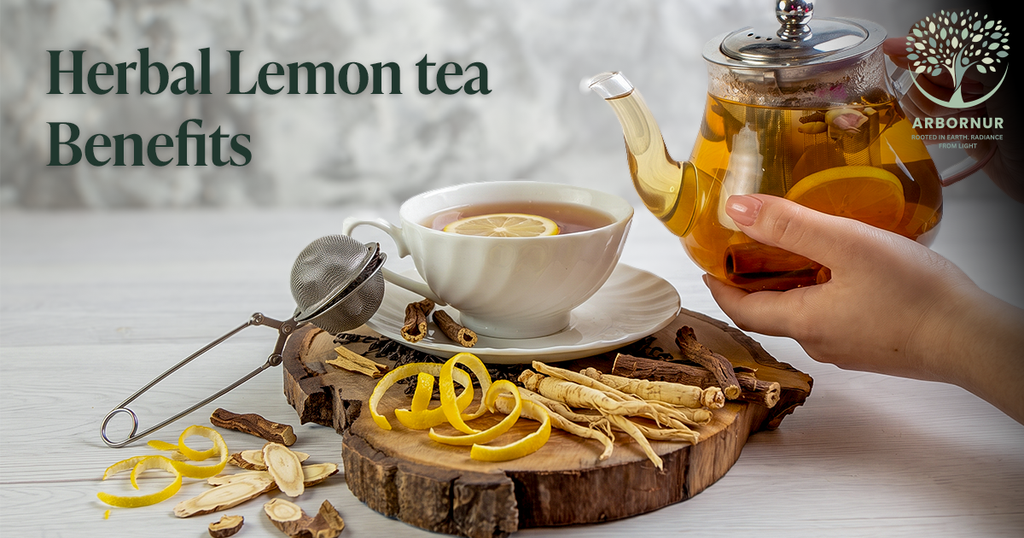
Herbal Lemon Tea Benefits and What They Actually Do For You
Herbal lemon tea covers a few different drinks that get lumped together, lemon balm tea (an herbal infusion from the mint family, naturally caffeine free) and lemon green tea (true green tea leaves brewed with fresh lemon) being the two most popular. Lemon balm tea is best known for its calming effect, supporting relaxation, sleep and digestion, while lemon green tea pairs green tea's antioxidant catechins with vitamin C from lemon, which may help the body absorb those antioxidants more effectively and support energy, metabolism and general immune health. Neither is a cure all, but both are simple, low effort additions to a daily routine that a lot of people notice a genuine difference from.
There's a reason lemon and tea keep turning up together across so many cultures and so many centuries, a racing mind at 11pm, a stomach that won't settle after dinner, that midafternoon slump where coffee feels like overkill but water isn't cutting it. These are every day, unglamorous pain points, and most of us have tried at least one "natural" fix for them without really knowing if it does anything.
Herbal lemon tea, in its various forms, has built its reputation on exactly these small, recurring frustrations rather than any single miracle claim. This guide breaks down what the research actually says about the two most talked about versions, lemon balm tea and lemon green tea, so you can work out which one, if either, is worth adding to your cupboard.
It also helps to separate the marketing language from the actual plant science before going any further. "Herbal lemon tea" gets used loosely enough online that people often assume it's one drink with one set of benefits, when in reality it's shorthand for at least two genuinely different plants, prepared in different ways, doing different jobs in the body. Getting that distinction straight from the outset is really the difference between picking a tea that actually addresses what's bothering you and picking one at random because the label mentions lemon.
What Is Herbal Lemon Tea, Exactly?
"Herbal lemon tea" isn't one specific drink, it's really an umbrella term covering any tea like infusion built around lemon, and the two most common versions work quite differently. Lemon balm tea is a true herbal infusion, or tisane: it's brewed from the dried or fresh leaves of the lemon balm plant (Melissa officinalis), a member of the mint family that carries a naturally lemony scent and flavour without containing any actual tea leaf or caffeine. Lemon green tea, on the other hand, is genuine tea, leaves from the Camellia sinensis plant, brewed with fresh lemon juice or peel added either during or after steeping.
The distinction matters because it changes what you're actually getting in the cup. Lemon balm tea is caffeine free and leans toward calming, herbal properties. Lemon green tea keeps green tea's natural caffeine and its well-studied catechin antioxidants, with lemon playing a supporting role rather than being the main act. Both get filed under "herbal lemon tea" in everyday conversation, but they suit quite different moments in your day.
There's also a broader historical thread worth knowing. Lemon balm has been used in European herbal medicine since at least the Middle Ages, traditionally reached for anything from nervous complaints to digestive upset, well before anyone had isolated rosmarinic acid or understood GABA. Green tea, meanwhile, has thousands of years of use across East Asia, with lemon a much more modern addition, popularised as global tea culture blended with citrus traditions from the Mediterranean and Middle East. Neither pairing is new or trend driven, they're both old habits that modern research has simply started catching up to.
What's Actually In A Cup Of Herbal Lemon Tea?
It helps to know what you're actually drinking rather than taking "antioxidants" and "calming compounds" on faith. A cup of lemon balm tea mainly delivers rosmarinic acid and a handful of related phenolic compounds, along with small amounts of citral, linalool and geraniol, the volatile oils responsible for its lemony scent and much of its antispasmodic, digestion supporting effect. It contains no caffeine and negligible calories, which is part of why it's such a low risk evening habit.
A cup of lemon green tea, by comparison, carries green tea's full catechin profile, led by EGCG, along with EC, ECG and EGC, plus a naturally occurring dose of L theanine and a moderate amount of caffeine, typically somewhere between a third and half of what you'd get from a standard cup of coffee, depending on brew strength. The lemon itself adds vitamin C, a small amount of citric acid (which is thought to help stabilise the tea's catechins during digestion), and trace flavonoids of its own. None of these compounds are exotic or hard to source, they're the same plant chemistry behind why lemon balm and green tea have shown up in traditional medicine for centuries, but knowing roughly what's in the cup makes it a lot easier to judge which claims about it are reasonable and which are overselling it.
Lemon Balm Tea Benefits
What Is Lemon Balm?
Lemon balm is a herbaceous perennial in the mint family, native to Europe and now grown widely around the world for its lemony, slightly minty leaves. It's been used in traditional herbal medicine for centuries, long before modern research started properly testing whether any of those traditional uses actually held up, and a fair amount of the more recent evidence suggests at least some of them do, even if the research base is still smaller than for something like green tea.
Lemon Balm Tea For Sleep And Relaxation
This is the benefit lemon balm is best known for, and it's also the one with the most consistent research behind it. Lemon balm contains phenolic compounds, including rosmarinic acid, which appear to have a calming, mildly sedative effect, some research suggests it may work partly by supporting GABA activity in the brain, the same neurotransmitter system that's associated with relaxation and reduced nervous system activity. Several small studies have found that lemon balm, taken regularly over one to two weeks, was associated with improved sleep quality and reduced insomnia symptoms, and it's often combined with valerian root in sleep focused herbal blends for a similar reason.
If what's actually keeping you up at night is a mind that won't switch off after a long day, that's precisely the pain point a calming, caffeine free wind down tea is built for, which is exactly why Arbornur's lemon balm blend leans into that slow, unwinding role rather than trying to be an all purpose everyday tea. A cup an hour or so before bed, as part of a proper wind down routine, tends to suit the way lemon balm's calming compounds actually work, gently, over time, rather than as an instant knockout.
Lemon Balm Tea For Digestion
Lemon balm has a long traditional history as a digestive aid, and there's a reasonable amount of research backing that use up. Its bioactive compounds, including citral, linalool and rosmarinic acid, appear to have antispasmodic properties, meaning they may help ease the muscle contractions behind bloating, cramping and general post meal discomfort. Some evidence also points to lemon balm helping food move through the digestive tract more efficiently, which is part of why it's traditionally reached for after a heavy meal rather than on an empty stomach.
For anyone whose evenings are regularly derailed by a stomach that won't settle after dinner, that heavy, bloated feeling that makes it hard to relax, let alone sleep, a herbal tea that targets both digestion and calm in the same cup solves two connected problems at once, rather than needing a separate remedy for each.
It's also worth understanding why lemon balm seems to work on digestion in the first place, rather than just taking the effect on faith. A lot of everyday digestive discomfort, bloating, cramping, that tight feeling after a stressful or rushed meal, isn't purely mechanical. The gut and the nervous system are closely linked, and stress hormones can slow digestion and tighten the smooth muscle around the stomach and intestines. Because lemon balm's compounds act on both fronts, calming the nervous system and directly relaxing smooth muscle, it's plausible that some of its digestive benefit comes from addressing the stress side of the equation as much as the purely physical side, which would explain why so many traditional uses of lemon balm bundle "nerves" and "stomach" together rather than treating them as separate complaints.
Lemon Balm Tea For Mood, Stress And Focus
Beyond sleep and digestion, a number of studies have looked at lemon balm's effect on mood and stress more broadly. Some trials have found that lemon balm extract, whether taken as a supplement or brewed as tea, was associated with reduced symptoms of anxiety and improved measures of calm and attentiveness, and one combination study using lemon balm alongside lavender reported improvements in both anxiety and low mood. There's also early research into lemon balm's terpene compounds and their effect on cognitive function, including some interest in its potential role supporting focus and mental clarity during stressful periods.
None of this makes lemon balm tea a substitute for proper mental health care, and the research base, while promising, is still limited compared to well studied compounds like green tea's catechins. But as a low risk, everyday habit for taking the edge off an especially stressful day, it's one of the more evidence backed herbal options available.
Where this tends to show up most in practice is less dramatic than the research summaries make it sound, it's rarely a case of anxiety disappearing after one cup. What people more commonly report is a slightly lower baseline of tension across a stretch of weeks: fewer racing thoughts while trying to unwind, a bit more patience during an ordinary stressful afternoon, a sense of taking the edge off rather than eliminating stress altogether. That's a realistic, modest kind of benefit, and it's worth setting expectations there rather than treating lemon balm as a fix for anything more significant than everyday tension.
Other Reported Benefits Of Lemon Balm Tea
A handful of smaller studies have looked at other potential uses for lemon balm, generally with less certainty than the sleep, digestion and mood research above. These include:
• Menstrual comfort, some trials have found lemon balm extract associated with reduced severity of period pain and PMS symptoms, likely linked to its antispasmodic properties
• Skin support, lemon balm's rosmarinic acid has anti inflammatory and antioxidant properties that have shown some benefit for skin irritation when applied topically, though this is a different use case from drinking it as tea
• Cold sore management, topical lemon balm preparations have shown antiviral activity against the herpes simplex virus in some studies, again as a topical cream rather than something drinking tea would directly address
These are worth knowing about, but they're a lower confidence tier of evidence than the calming and digestive benefits above, and none of them should be treated as a replacement for medical advice.
Benefits Of Drinking Lemon Green Tea
What Actually Happens When You Add Lemon To Green Tea
Green tea is one of the more thoroughly studied beverages in nutrition research, largely thanks to its high concentration of catechins, a family of antioxidant compounds, the most researched of which is EGCG (epigallocatechin gallate). What's interesting about pairing it with lemon specifically is that this isn't just a flavour choice: some research suggests the vitamin C and acidity in lemon juice may help stabilise and improve the body's absorption of those catechins, which are otherwise fairly sensitive to breakdown during digestion. In other words, the lemon isn't just along for the ride, it may genuinely help green tea do more of what it's already good at.
Lemon Green Tea For Energy And Metabolism
This is usually the first thing people reach for lemon green tea for, that midafternoon slump where you're not quite tired enough for a nap but not sharp enough to keep working properly. Green tea's natural caffeine content is moderate, generally gentler than coffee, and is often paired in research with L theanine, an amino acid associated with calm, sustained focus rather than the jittery spike and crash pattern of stronger caffeinated drinks.
On the metabolism side, multiple studies have linked regular green tea consumption, particularly varieties with higher EGCG content, taken consistently over eight to twelve weeks or more, with modest reductions in body weight and body fat, likely through a combination of increased fat oxidation and a small boost to resting metabolic rate. Lemon's role here is more supportive than transformative: it helps preserve those catechins through digestion and adds a small amount of its own metabolism supporting compounds, rather than being a fat burning ingredient on its own. If the pain point you're dealing with is that flat, sluggish afternoon energy dip, a lemon green tea blend is a genuinely reasonable swap for a second coffee, which is the exact gap Arbornur's lemon green tea is designed to sit in, a lighter lift than caffeine alone without losing the alertness altogether.
It's worth being realistic about the scale of these metabolism findings, though, since headlines about green tea and weight loss tend to overstate what the underlying studies actually found. The reductions in body weight and fat seen in trials are generally modest, a few percentage points over several months, not a dramatic transformation, and they consistently show up alongside a normal diet and activity level, not as a replacement for either. The honest way to think about lemon green tea's role here is as a small, supportive nudge that compounds over a long stretch of consistent use, rather than something that moves the needle much on its own in the short term.
Lemon Green Tea For Antioxidant And Immune Support
Both halves of this pairing bring their own antioxidant contribution. Green tea's catechins have been studied for their role in protecting cells from oxidative stress, which is linked in ongoing research to a lower risk of a range of chronic conditions over the long term. Lemon contributes a solid dose of vitamin C, which plays a well established role in supporting normal immune cell function and has its own antioxidant activity independent of green tea's catechins. Together, the combination gives you two different antioxidant pathways in a single cup, rather than relying on just one.
This is particularly relevant for anyone whose pain point is picking up every cold that goes around the office in winter, a daily habit that supports general immune resilience, alongside sleep, diet and the basics, is a sensible low effort addition rather than a guaranteed shield against getting sick.
It's also worth noting how these two antioxidant systems actually complement each other rather than simply duplicating the same job twice. Green tea's catechins are fat soluble compounds that work primarily inside cell membranes, while vitamin C is water soluble and does most of its antioxidant work in the fluid surrounding and inside cells. Having both in the same cup means you're covering more of the oxidative stress that the body deals with day to day, rather than concentrating all of the antioxidant activity in one narrow pathway, which is part of the reasoning researchers give for why the lemon and green tea pairing shows up so often in nutrition literature rather than being treated as a novelty combination.
Lemon Green Tea For Heart And Brain Health
Green tea's catechins have also been studied for their relationship with cardiovascular health, with some research linking regular consumption to improved cholesterol markers and better blood vessel function, and a small but growing body of evidence looking at green tea's role in supporting healthy blood pressure. On the cognitive side, green tea's combination of caffeine and L theanine has been associated with improved alertness and calm focus in several studies, and some early research has explored whether green tea's catechins may help protect nerve cells over the long term. Lemon's vitamin C content complements this with its own role in collagen production and general cellular protection, though most of the heart and brain research to date centres on the green tea itself rather than the lemon addition.
The Research, In Brief
If you just want the short version of what's actually been studied, here's the recap:
• Lemon balm: several small trials link it to improved sleep quality within one to two weeks of regular use, reduced anxiety symptoms, and eased digestive discomfort like bloating and cramping
• Lemon green tea: reviews of green tea trials link higher catechin intake over eight to twelve plus weeks to modest reductions in body weight and fat, improved cholesterol markers, and better blood vessel function
• Lemon's specific contribution: early evidence that lemon's vitamin C and acidity may help protect green tea's catechins during digestion, plus its own established role in immune support
• Overall evidence strength: promising but still developing, most studies are small to moderate in size, and neither tea should be treated as a substitute for medical treatment
Herbal Lemon Tea vs Plain Lemon Water: What's The Real Difference?
This comparison comes up a lot, since both are cheap, simple, lemon flavoured drinks people reach for as a "healthy habit." The honest answer is that they're not really competing with each other, lemon water is essentially water plus vitamin C and a small amount of flavonoids from the lemon itself, useful mainly for hydration and a mild vitamin C top up. Herbal lemon tea, whether lemon balm or lemon green tea, brings an entirely separate set of plant compounds into the mix, rosmarinic acid and related phenolics in lemon balm, or catechins and L theanine in green tea, that plain lemon water simply doesn't contain.
If your goal is specifically hydration or a light vitamin C boost, lemon water does that job perfectly well on its own. If your goal is calming a busy mind, easing digestion, or getting an antioxidant and gentle energy boost, that's where the actual tea component, balm or green, is doing the heavy lifting, with the lemon playing a supporting role rather than being the main event.
Who Tends To Benefit Most From Each Tea?
Research aside, it's worth mapping these teas against real, everyday situations, since that's usually a more useful way to decide than reading through study abstracts. A few common profiles tend to show up again and again in who reports getting the most out of each one.
You might get more from lemon balm tea if:
• You regularly lie awake with a mind that won't switch off, even when you're physically tired
• Stress tends to show up in your stomach, bloating, cramping or discomfort after tense days or heavy meals
• You already avoid caffeine in the evening but still want a warm, ritual style drink to wind down with
• You're looking for a gentle, low risk addition to an existing evening routine rather than a dramatic fix
You might get more from lemon green tea if:
• You hit a genuine energy wall in the early to mid afternoon but don't want the crash that comes with more coffee
• You're building general antioxidant and immune supportive habits into an otherwise reasonable diet
• You're already comfortable with moderate caffeine and want a gentler alternative to your usual cup
• You're looking to support a broader healthy weight or metabolism focused routine over the medium to long term, alongside diet and activity
These aren't rigid categories, plenty of people find a use for both across different points in the day, but they're a more practical starting point than trying to decide purely from a list of studied compounds.
Lemon Balm Tea vs Lemon Green Tea: Which Should You Actually Reach For?
The honest answer is that they solve different problems, so the better question isn't which one is "best" but which pain point you're actually trying to fix. If your issue is winding down at night, a racing mind, or a stomach that won't settle after dinner, lemon balm tea's caffeine free, calming profile is the better match, it's built for the evening, not the morning. If your issue is a flat afternoon energy dip, wanting an antioxidant boost, or looking for a gentler alternative to another coffee, lemon green tea's moderate caffeine and catechin content is the more useful tool.
A lot of people end up keeping both in rotation rather than picking one, lemon green tea earlier in the day when they want a lift, and lemon balm in the evening when they want to switch off. That's really the gap Arbornur's herbal lemon range is built around: rather than one all purpose lemon tea trying to do everything, having a calming lemon balm blend and an energising lemon green tea blend sitting side by side means you're reaching for the one that actually matches what your day (or evening) needs, instead of hoping one drink covers every pain point at once.
How To Brew Herbal Lemon Tea Properly
Getting the brew right matters more than people expect, particularly for preserving the more delicate compounds in both types of tea. For lemon balm tea, use water just off the boil (around 90–95°C) rather than a full rolling boil, and steep for five to seven minutes to properly draw out the calming compounds without over extracting bitterness. For lemon green tea, water that's too hot is the most common mistake, green tea leaves are more delicate than black tea, so aim for around 75–80°C and a shorter steep of two to three minutes, adding fresh lemon juice or a thin slice after steeping rather than boiling it directly in the water, since heat can break down some of lemon's vitamin C content.
• Use fresh, cool filtered water where possible, it makes a noticeable difference to flavour
• Add lemon after steeping for green tea, to protect its vitamin C content
• Avoid oversteeping lemon balm, which can turn the flavour grassy or bitter
• Store both dried leaves in an airtight container away from light and moisture to preserve their compounds
How Much, And How Often?
Most of the research behind lemon balm's calming and digestive effects used it as a regular, ongoing habit rather than a one off remedy, typically one to three cups a day, with the sleep related studies usually testing a cup taken in the evening over one to two weeks before assessing results. That pattern lines up with how most people naturally use it: a single cup rarely does much on its own, but a consistent evening habit tends to be where the benefit actually shows up.
Lemon green tea is generally fine at two to three cups a day for most healthy adults, factoring in its moderate caffeine content, that's usually enough to notice the gentler lift in alertness without pushing into the kind of caffeine load that disrupts sleep later on. As with most things involving caffeine, timing matters as much as quantity: a cup in the morning or early afternoon is a very different proposition to one at 9pm.
Possible Side Effects And Who Should Be Careful
Both teas are considered safe for most healthy adults in normal dietary amounts, but they're not entirely without considerations. Lemon balm is generally well tolerated, though some people report mild side effects like headache, dizziness or an upset stomach, and it's worth being cautious if you're pregnant, breastfeeding, taking thyroid medication, or scheduled for surgery soon, since lemon balm may interact with sedatives and thyroid related treatments. Lemon green tea's main consideration is its caffeine content, while moderate compared to coffee, it can still affect sleep if consumed late in the day, and the tannins in green tea can reduce iron absorption if drunk with iron rich meals.
Conclusion
Lemon balm and lemon green tea both earn their reputations honestly rather than through hype, one calms a busy mind and a restless stomach, the other lifts flagging energy and adds a genuine antioxidant boost, and between the two of them they cover most of the small, everyday frustrations people reach for herbal tea to fix in the first place. Neither is a miracle cure, but both are simple, low risk habits that a lot of people notice a real difference from within a couple of weeks of drinking them regularly.
If you're not sure where to start, think about which pain point actually shows up more in your day, the wired evenings when you cannot switch off, or the flat, foggy afternoons, and let that decide the tea rather than the other way around. That's the exact thinking behind Arbornur's herbal lemon range: a lemon balm blend built for winding down, and a lemon green tea built for lifting you back up, so whichever problem is showing up today, there's a cup that's actually built for it rather than a one size fits all lemon tea trying to do both jobs at once.
Disclaimer
This article is for general information only and is not medical advice. Herbal lemon tea, lemon balm tea and lemon green tea are not medically proven cures or treatments for any condition, and results can vary depending on the individual, their health condition, and the type of tea used. Please consult your doctor before making any of these teas a regular part of your routine, especially if you are pregnant, breastfeeding, on medication, or managing a health condition.
FAQs
What are the main benefits of herbal lemon tea?
It depends on the type, lemon balm tea is mainly associated with calming effects, better sleep and digestive comfort, while lemon green tea is linked to antioxidant support, gentle energy and metabolism benefits, thanks to the combination of green tea's catechins and lemon's vitamin C.
What does lemon balm tea actually do?
Lemon balm tea's phenolic compounds, particularly rosmarinic acid, appear to have a calming effect linked to GABA activity in the brain, which is why it's most commonly used to support relaxation, sleep and easing digestive discomfort like bloating and cramping.
What are the benefits of drinking lemon green tea?
Lemon green tea combines green tea's antioxidant catechins with lemon's vitamin C, which may improve catechin absorption. Reported benefits include gentle energy without the crash of stronger caffeine, antioxidant and immune support, and links to better metabolism and heart health with regular consumption.
Does lemon balm tea contain caffeine?
No, lemon balm is a herbal infusion made from the lemon balm plant, not the tea plant, so it's naturally caffeine free, which is part of why it suits evening or bedtime drinking.
Can I drink herbal lemon tea every day?
For most healthy adults, both lemon balm tea and lemon green tea are considered safe for regular daily use in normal amounts. If you're pregnant, breastfeeding, on medication, or managing a health condition, it's best to check with a doctor first.
Is lemon green tea good for weight loss?
It can be a useful addition to an overall healthy diet, green tea's catechins have been linked to modest increases in fat oxidation and metabolic rate in several studies, but it isn't a standalone weight loss solution and works best alongside good nutrition and activity habits.
