
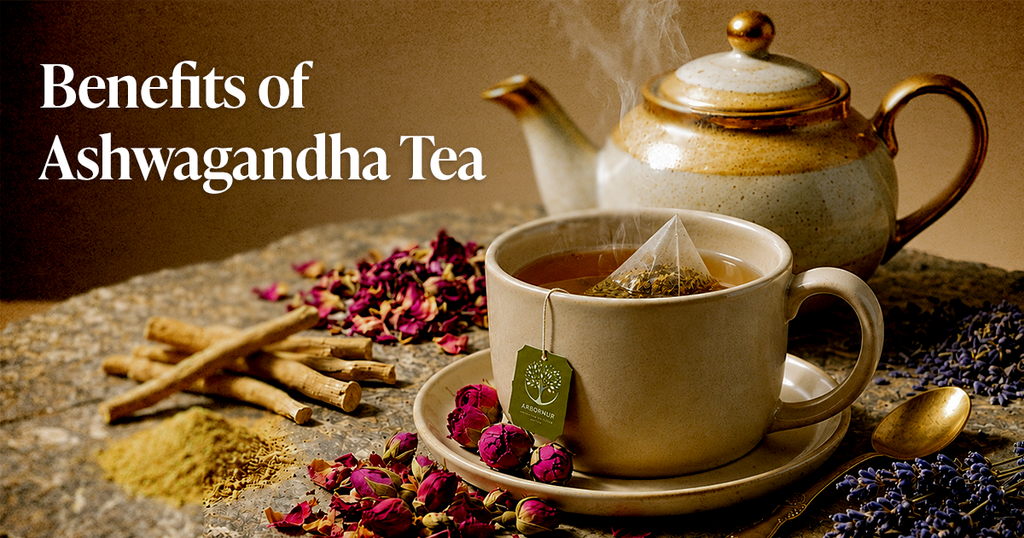
Ashwagandha Tea Benefits: Uses, Side Effects, and Brewing Method
Ashwagandha is one of the herbs that has been used traditionally. People living in India, Africa, and parts of the Middle East used it in the form of tea. It was used to treat problems like exhaustion, anxiousness, and also for struggles in the sleep cycle. Ashwagandha tea has been used as a part of routine and a long-term practice.
We can get the same root from the wellness stores today. In this blog, you will learn about what evidence tells us about ashwagandha tea benefits, its root, and how to use it daily.
Quick Summary
- A Ramayana herb from Ayurvedic tradition, used for stress control, fatigue, and improved sleep.
- Evidence for better stress management and sleep is present, but other areas are still being researched.
- Evening is the best time to take the Ashwagandha tea.
- Review the safety section, as it is not suitable for everyone.
What is Ashwagandha Tea?
Ashwagandha tea is a herbal mix made from the root of Withania somniferous. It is the traditionally used Ayurveda with specified health benefits.
The root of ashwagandha is dried and ground to turn it into a powder. It is steeped in warm-hot water just like most of the herbal teas. It is also known as Indian ginseng or winter cherry in some places.
Ashwagandha holds the classification of rasayana in Ayurveda medicine. That means it is known to restore body and mind. The active compounds in Ashwagandha root are called withanolides. These are subjected to focused modern research.
Traditional Importance in Ayurvedic
It is better to understand how ashwagandha has been used previously to know what benefits it offers individually.
Ashwagandha is not a fast-acting herb. People have used it for months to get its results. It was used for three main purposes in Ayurveda, such as:
-
Mental fatigue (tiredness) and nervous strain (anxiety)
-
Disrupted sleep cycle
-
Physical recovery after exercise
5 Health Benefits of Ashwagandha Tea
The evidence for the effectiveness of ashwagandha is strong for stress and sleep management. But its effectiveness in metabolism, immunity, and hormonal management is still being researched.
-
Stress and Mental Clarity
Ashwagandha has the longest history in dealing with stress and other issues related to mental clarity. The high cortisol level in your body mainly causes stress.
According to a study held in 2012, adults using ashwagandha for chronic stress showed a significant drop in cortisol levels over 60 days or 8 weeks.
-
Improved Sleep Quality
The Latin name of the ashwagandha plant includes “somnifera,” which means “sleep-inducing”. The name itself reflects the evidence given by the researchers.
A review and meta-analysis collected the data from 5 different trials and found improvement in the quality of sleep.
Ashwaandha tea is a purely natural source of herbal tea. It is not a sedative. Yet people notice great differences in their sleeping cycles.
-
Body Recovery and Physical Stamina
Regular use of ashwagandha has been proven to improve the strength of muscles and overall performance of the body. It may also help to reduce fatigue and support faster recovery after workouts.
Research published in “Journal of Functional Morphology and Kinesiology (MDPI)” (2021) showed improvements in muscle strength and cardiorespiratory functioning, and other recovery signs by the use of ashwagandha in routine.
-
Markers of Immunity and Metabolic Activities
Some research has explored the possible effects of ashwagandha root on improving immunity, balancing blood sugar, and cholesterol levels. However, this research is still in its initial stages. It is not strong enough to clear these health benefits, as these are possible ideas.
-
Hormonal Balance
Fewer studies have been carried out to find out the benefits of ashwagandha for thyroid levels and other hormone-related problems. The research has been carried out for both men and women, but the results are at an early stage. If you have a thyroid condition, then you should consult a doctor before using ashwagandha root as a tea or supplement.
Who Should Avoid Using Ashwagandha Tea
Ashwagandha is safe for most healthy adults, even if it is used routinely. But people with the following conditions must avoid or consult a doctor before adding Ashwagandha to their routine if:
-
You are a pregnant or breastfeeding woman
-
You have thyroid (underactive or overactive)
-
You are taking medications for anxiety and stress
-
You have autoimmune diseases, i.e., rheumatoid arthritis
-
You are due for surgery (stop at least 2 weeks before the surgery)
Dosage For Daily Use
Ashwagandha is one of the most studied adaptogen roots used for stress response. You may consume 1 teaspoon of Ashwagandha root powder (300-500 mg) in one cup of tea per day. Some people may take it twice a day (morning and evening).
For capsules, the standard dose is listed on the label by the manufacturing company. You may find Ashwagandha tea with maximum benefits and all the required information at Arbornur. They provide the dosage and ingredient details on the packaging so that you know what you get with every cup of tea.
Best time to have a Cup of Ashwagandha Tea
It is recommended to have ashwagandha tea in the evening or about an hour before bedtime.
Cortisol usually drops in the evening. Ashwagandha herb has calming properties that complement the rhythm.
Other than this, morning time is the second-best option to have a warm cup of ashwagandha tea. People may use it in the morning for stress release rather than for managing and prompting their sleep cycle.
You may try both, because everybody is different and works differently. It may work best in the morning for one person and is better in the evening for another. What matters most is the consistency of the tea intake.
How to Make Ashwagandha Tea
All You Need
-
1 teaspoon ashwagandha powder or a tea bag
-
2 cups of water/milk
-
Honey, cinnamon, pinch of black pepper (optional)
How to Brew
-
Boil 2 cups of water or milk
-
Add powder or the tea bag to the water/milk
-
For powder - lower the heat and simmer for 10 minutes
-
Strain in your cup
-
Add an optional ingredient to enhance the taste
-
Enjoy your beneficial ashwagandha root tea
Flavour Profile
Ashwagandha is translated from Sanskrit, which roughly means “smell of horse”. It is named this way because of the earthy and slightly sharp taste of the root. Optional ingredients may balance the flavour of the tea. All the optional ingredients are healthy and beneficial for your body in their own way.
If you want a perfect blend of ashwagandha tea, you may try Tranquility Ashwagandha Tea by Arbornur. It is one of the best pre-blended versions of tea for easy use.
Ashwagandha Tea VS Capsule: What Is Better?
Capsules: have a standard amount of herb content, and it does not require preparation time.
Tea: does not have a standard or equal quantity of ashwagandha herb. It needs proper time for preparation, but gives a calming and enjoyable warm experience with every sip.
A daytime support capsule may be convenient. But if you are finding a routine to relax yourself then the tea is a perfect option for you.
Combination of Ashwagandha with Other Herbs
Ashwagandha tea goes well with some other herbs because they enhance the quality and taste of the tea. The most popular herbs that may pair with Ashwagandha are:
Ginseng: It is also traditionally used for stamina and mental health improvement.
Cinnamon: cinnamon provides extra warmth in every sip.
Lavender: it gives the blend a soft and smooth floral smell.
Note: Do not combine herbs without a prescription if you are dealing with certain medical conditions.
Final Words
Ashwagandha holds benefits that most wellness ingredients lack. It has been used traditionally for years, and now modern scientific researchers are conducting trials to examine and prove its benefits. It is proven to help with stress and sleep conditions. If you are looking for a caffeine-free evening routine with amazing benefits, Ashwagandha tea is the best choice for you.
Disclaimer: This blog is written for informational purposes only. It does not aim to give medical advice, diagnosis, or treatment. Please consult a doctor before changing your health routine, specifically if you have any medical conditions or are taking prescribed medications.
FAQs
-
Can I have ashwagandha tea every day?
Yes. Ashwagandha tea does not give visible benefits on occasional use. It requires consistency in order to help your body improve.
-
What is the best time to have Ashwagandha tea?
Evening, about an hour before bedtime, is ideal for ashwagandha tea. It may also work in the morning for stress relief. Try both options to know what suits your body the best.
-
Are there any side effects of using ashwagandha?
No, it suits most healthy adults. But you should consult a doctor if you are under certain medical conditions, such as pregnancy, thyroid issues, sedative use, or autoimmune diseases.
-
How long does it take to work?
According to the research and trial, ashwagandha may take upto 8 weeks or more to show results in the body. Do not expect sudden changes while using ashwagandha.
-
What is better, tea or a capsule?
For standard and equal dosage, you may use a capsule. But tea is recommended if you want a relaxing moment, along with the benefits.
